


Huwebes, Hunyo 30, 2011
LA River
Ipinaskil ni chocoholicpotterhead sa 5:13 AMBecause of the series finale of Brothers and Sisters, I found out about two wonderful songs. The first one is sung by the (emphasis on the) Sir Elton John, entitled Mona Lisas and Madhatters and the other one is from a band called Honey Honey, entitled L.A. River. Both songs are very good and relaxing. You should try to listen to it. :)
Mona Lisas and Mad Hatters
by Sir Elton John
Now I know "Spanish harlem" are not just pretty words to say
I thought I knew
But now I know that rose trees never grow in New York city
Until you've seen these trash can dreams come true
You stand at the edge while people run you through
And I thank the Lord there's people out there like you
I thank the Lord there's people out there like you, mm
While Mona Lisas and mad hatters
Sons of bankers, sons of lawyers
Turn around and say "good morning" to the night
For unless they see the sky but they can't and that is why
They know not if it's dark out side or light
This Broadway's got, its got a lot of songs to sing
If I knew the tunes I might join in, oh and
I go my way alone, grow my own
My own seeds shall be sown in New York city
Subway's no way for a good man to go down
Rich man can ride and the hobo he can drown
And I thank the Lord for the people I have found
I thank the Lord for the people I have found, oh
While Mona Lisas and mad hatters
Sons of bankers, sons of lawyers
Turn around and say "good morning" to the night
For unless they see the sky, but they can't and that is why
They know not if it's dark out side or light
And now I know "Spanish harlem" are not just pretty words to say, hmm
I thought I knew
But now I know that rose trees never grow in New York city
Until you've seen these trash can dreams come true and
You stand at the edge while people run you through
And I thank the Lord there's people out there like you, yeah
I thank the Lord there's people out there like you, oh
While Mona Lisas and mad hatters
Sons of bankers, sons of lawyers
Turn around and say "good morning" to the night
Well unless they see the sky, but they can't and that is why
They know not if it's dark outside or light
They know not if it's dark outside or light
L.A. River
by Honey Honey
Went down to the banks of the LA river
Had to hop a chain link fence
Concrete walls on the LA river
Water lapping up on the cement
Oh, but I love my new home
Listen to the big city sound
Watching that LA river roll down
By the trains past Chinatown
Dip my fingers in the warm black water
Raw red skin on my knees
Sail my boat down the LA river
Thought I saw a body in the weeds
Oh, but I love my new home
Listen to the big city sound
Watching that LA river roll down
By the trains past Chinatown
Oh, but I love my new home
Listen to the big city sound
Watching that LA river roll down
By the trains past Chinatown
Martes, Hunyo 28, 2011
Still Walking (2008)
Ipinaskil ni chocoholicpotterhead sa 2:32 PM |
| The picture is not mine. Click for the original source. |
Original Title: Aruitemo, Aruitemo (歩いても 歩いても)
Directed and Written by: Hirokazu Kore-eda
Starring: Hiroshi Abe, You, Yui Natsukawa
Music by: Gontiti
Running Time: 114 mins.
Release Date: June 2008 (Japan) /August 2009 (US)
Language: Japanese
Tomato Meter: 100% (Critics) | 88% (Audience)
IMDB Rating: 7.9/10
Chocometer: 9.1 chocolates
Not your ordinary family melodrama.
 |
| Click for the original source. The picture is not mine |
Still Walking (2009) is a wonderful masterpiece from Hirokazu Kore-eda about the events that transpired in one whole summer day as the Yokoyama family reunites to commemorate the death of the eldest son who passed away 15 years ago.
It is a mirror of the dynamics between ordinary family members and the embedded flaws revealed from the snippets of conversation that occur all throughout the film. There's no huge arguments that escalated from the strained relationship of each family member. The confrontations are done in a natural manner, wherein instead of resorting to a major fallout, the tension is just exhibited in uncomfortable exchanges that last for a fraction of a second and immediately broken by awkward attempts to change the subject and ignore the issue. No overly exaggerated drama. No shouting. Nothing of that sort. It's just your typical day-to-day life projected on the big screen and it pulls you slowly and slowly until you realize that you and the characters are one and the same. The characters are so diverse that it is impossible for the viewers not to relate to at least one of them.
 |
| Click for the original source. The picture is not mine |
You have the old and retired patriarch Kyohei who is too proud and cold that he does not even care about how his gripe is affecting the family. He cannot move on with the death of his favorite son, Junpei, fifteen years ago, and this causes a strain between him and the youngest son, Ryota. Ryota, the frustrated and insecure art restorer is most affected by his brother's death that he can't even let himself visit his parents often and tries as much as possible to stay away from them. He has married the widow Yukari who has a son named Atsushi. The three of them were forced to visit Ryota's parents for Junpei's 15th death anniversary. Chinami, the middle child, is a cheerful mother of two who plans to move to her parents house with her husband Nobuo. She tries to ease the tension between the characters despite the chilly atmosphere that floats around the house.Another important character in the movie is the matriarch Toshiko, who may seem caring and warm at first, but is revealed to be despiteous towards Yoshio, the boy that her son saved 15-years ago.
The beauty of the movie lies on the fact that it is too close to home. It is too understated and simplistic but is careful not to cross the boundaries of catatonia. It is the poignant depiction of life, how we try to struggle to keep afloat despite the changing times; how we try to live and go on because time will never stop for us; how the wheels of existence keep on turning as we are put to alternating roles that were once seem unfamiliar to us. Moreover, it is a film about family ties; how we take for granted the smallest and simplest things and how we are reduced to words and promises that we never really keep.
 |
| The picture is not mine. Please click here for the original source |
The last ten minutes of the story is the true gem of the film. It seems to piece everything together and also contrasts the bitter reality that we have to face. The exchanges between the younger Yokoyama couple and their older counterparts are strikingly familiar to our generation. How the older ones yearn for more visits from their children and how the children resolves to avoid visiting their parents. It is a harsh reality but it is undeniably built on a solid foundation that we are well acquainted of. Ryota's recounting of not being able to see the soccer game with his father, never really being able to let his mother ride his car to go shopping and seemingly being too late for almost everything. It is not remorse. It is done in a matter-of-factly way that is too unnerving to really reflect on.
Again, Kore-eda has added another jewel to Japan's pride. Still Walking is part of my highly recommended list. It is not cathartic. It is not a feel-good movie. It is just a movie about life and the real meaning of our existence and funnily enough, it is a wonderful thing to behold.
The trailer of Still Walking (2008)
Lunes, Hunyo 27, 2011
Nobody Knows (2004)
Ipinaskil ni chocoholicpotterhead sa 1:12 PM
Nobody Knows (2004)
(誰も知らない Dare Mo Shiranai)
Directed by Hirokazu Koreeda
Produced by Hirokazu Koreeda
Written by Hirokazu Koreeda
Starring Yûya Yagira, Ayu Kitaura,Hiei Kimura
Music by Tatetakako
Running Time: 141 minutes
Rotten Tomatoes Rating: 93 %
IMDB Rating: 8/10
Chocoholic Rating: 8.2 chocolates
Rotten Tomatoes Rating: 93 %
IMDB Rating: 8/10
Chocoholic Rating: 8.2 chocolates
What makes someone a parent? Is it the fact that one is able to produce an offspring or is it something more than that? Nobody Knows (2004) try to explore the answer to that question and at the same time tries to show the stark reality of the effects of child abandonment in society and how it greatly takes away a big part of a child's life.
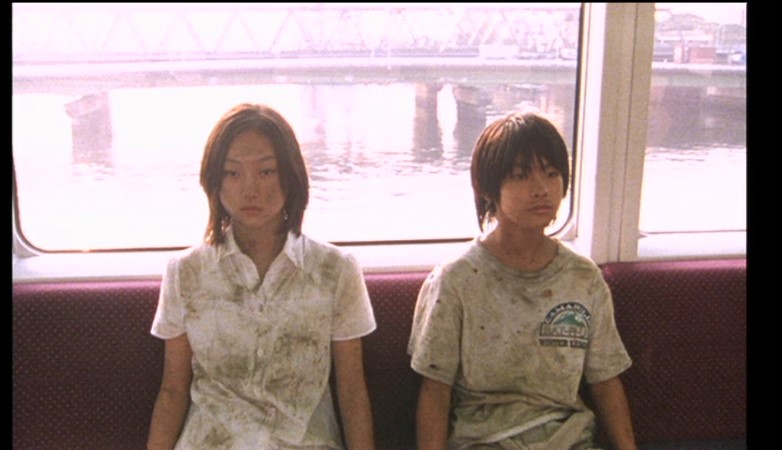
Based on a real life incident that happened in Japan, Nobody Knows is a story of the survival of four children after their irresponsible mother abandoned them. They are left to live on their own with the little amount of money that their mother left as she runs off and marry another guy.
 |
| Picture not mine. Click here for the original source. |
It starts when a mother and son (12 years old) moves into a new apartment with their bulky baggage. As the door closes, two children pops out of the huge luggage while another one is rendezvoused at the train station and is stealthily sneaked in by her big brother. The mother then tells her children that they are not allowed to go out of the room and play nor go to school. She goes off after a few day leaving the eldest son, Akira, in charge with 50,000 yen which he is supposed to budget for the rest of the days until she is back. When cash was running out, Akira tries to ask for help from the fathers of his sibling but the attempt was futile. He was able to get 5000 yen from them and that's it. Fortunately, their mother comes back bringing presents for them. She leaves the next day never to return again, leaving the four children on their own devices.
It does not give you a resolution. It is merely a recounting of an unfortunate incident that befell four kids who are too unlucky to be born to useless parents who think that parenthood is nothing but a childish game they can leave anytime they want to.
 |
| Picture not mine. Click here for the original source. |
It surprises me that despite the movie's haunting theme and plot, I was numb after watching it. Usually, I would cry my heart out because of how cruel the world is to these kids but I guess it was the intention of the director to distance the viewer from the emotions, make it as stoic as possible, because the alternate option will absolutely be heart-crushing that one cannot help but question the morals of society and be jaded for the rest of his/her life. The scarier fact about it was that it was based on a real life story so if you step over the boundaries and attached yourself to the characters, you will feel a burst of emotions inside you: depression from the injustice of the situation, anger towards the irresponsible parents who had the nerve to forsake their children and despair from what we have let our society become.
Koreeda's brilliance lies on the fact that he was able to show the story in a subtle documentary-like story-telling that one will almost believe that these children are real, that their struggles are real and you cannot do anything but hold on to your seat and watch helplessly as the story unfolds. Yuya Yagira's portrayal of a 12-year old boy who tries to provide for his siblings while also struggling to fight for a chance to hold on to a childhood that was too early to be taken away from him was unnaturally superb. It was as if Yagira did not exist and what we can see on the screen is Akira Fukushima, the abandoned boy who only wants to have a normal life but left with no choice. He makes us forget about reality, sucks as in and brings us to this parallel universe where we are as powerless as he is.
This movie is not for people who can't stand the lengthy and slow pace that usually characterize Japanese films. It is slow and dragging, what with the 141 minutes of screen time where no action happens aside from conversations between the kids and multiple close-up shots of particular scenes to accentuate the harrowing situation that the children are in. But no matter how slow-moving or simplistic the movie is, it is never boring because each scene pulls you in to the characters' chaotic world and it rewards you with such severe humanism as you have never seen before.
The musical score adds up to the pulchritude of the film as it underlines poignant scenes in the movie such as Akira's and Saki's walk from the Haneda Airport after burying Yuri, Akira's frustration when he runs out of coins on the telephone booth without being able to talk to the mother that abandoned them, etc.
It is a good movie to watch if you are looking for something unconventional that will slap irresponsible parents out there with striking cold reality of the effects of child abuse. It earns my respect for Japanese films and it surely is a part of my highly recommended list.
Here is a good movie review if you want one. 200 Days of Solitude
Biyernes, Hunyo 24, 2011
Nausicaä of the Valley of the Wind (1984) : Impressing on the Significance of Environmental Preservation
Ipinaskil ni chocoholicpotterhead sa 9:08 PM |
| The picture is not mine. Click here for the original source. |
--Directed by Miyazaki Hayao
-- Screenplay by Miyazaki Hayao
-- Starring: Sumi Shimamoto, Goro Naya, Yoji Matsuda
-- Music by: Hisaishi Joe
-- Duration: 116 min.
-- Tomatometer: 80%
-- IMDB Rating: 8.1 /10
-- Chocometer: 8.7 chocolates
-- Duration: 116 min.
-- Tomatometer: 80%
-- IMDB Rating: 8.1 /10
-- Chocometer: 8.7 chocolates
-- Language: Japanese
Title: Nausicaa of the Valley of the Wind (風の谷のナウシカ Kaze no Tani no Naushika) (1984)
Title: Nausicaa of the Valley of the Wind (風の谷のナウシカ Kaze no Tani no Naushika) (1984)
 |
| Picture is not mine. Click here for the original source |
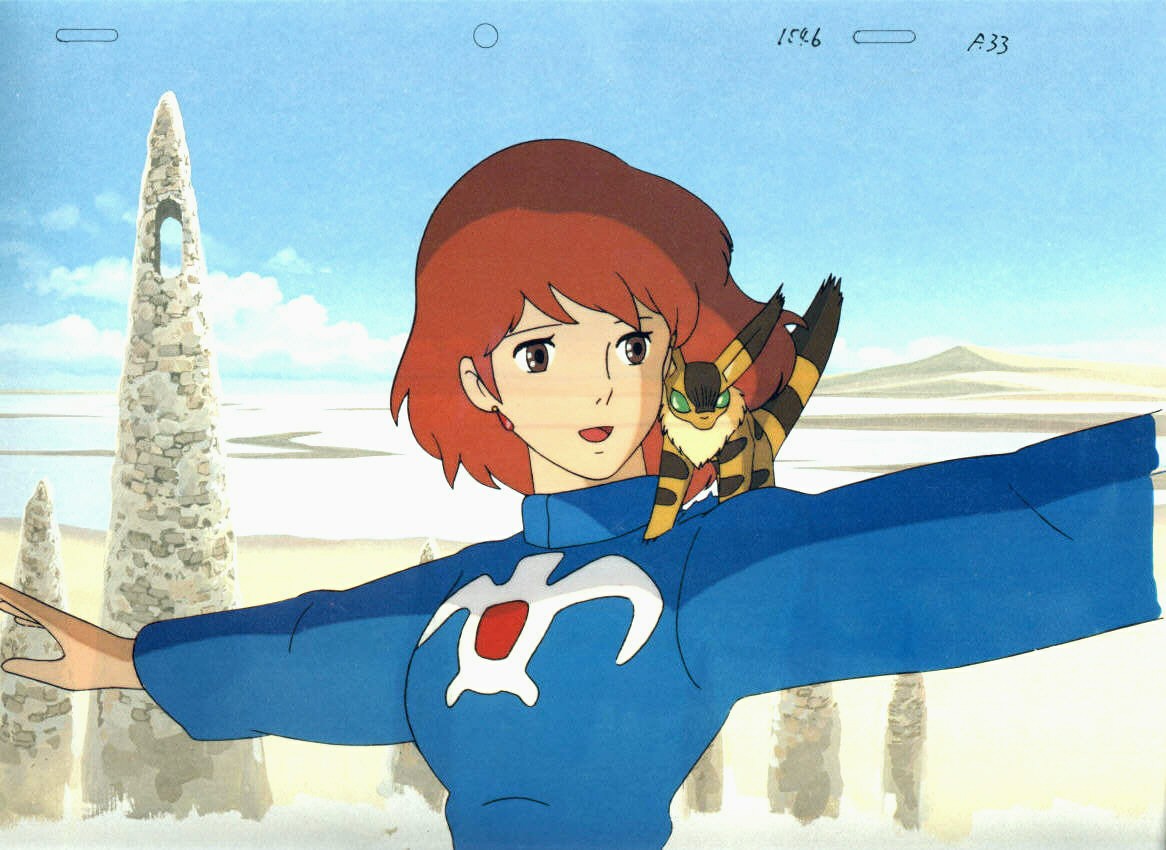
It is a post-apocalyptic movie set a thousand years after the Seven Days of Fire. The world is left with a toxic jungle where gigantic (and poisonous) insects called Ohmus roam the land. There are several kingdoms existing and one of the them is the Valley of the Wind where Nausicaa lives. She is a princess who usually ventures on the toxic jungle to communicate with the Ohmus. She is described as humble and peace-loving. Their kingdom is one of the few ones who still enjoy the benefits of fresh air free from the lethal poisons of the toxic jungle.
The peace of their land was soon disrupted and when a huge airship manned by Tolmekians crashes nearby. It is discovered that the ship was carrying an embryo of a giant soldier used in the war before as well as the captive Princess of Pejite. The Tolmekians are a powerful race who are planning to launch a war and conquer other kingdoms to make use of their resources. They just finished destroying Pejites, thus the captive princess.
A war between Nausicaa's people and the Tolmekians was launched as the latter try to revive the embryo of the giant soldier to gain more power. Nausicaa, with the help of other Pejites, then struggles to fight for her kingdom and stop the Tolmekians from destroying it and the rest of the world. She tries to protect the Ohmus in the process.
For a better summary, click here.
The Verdict:
I had high expectations about the movie hearing almost positive reviews about it from my Japanese students. It's supposed to be one of the most celebrated animations in Japan. It was a good movie, probably not the best that I have ever seen, but surely a quality one. Did it satisfy my expectations? 85% perhaps but not entirely. The ending was quite hanging. It gives you a motherhood finality, a feel good moment; this film, like most of its contemporaries, gives the viewer a resolution of the problem.
 |
| Photo is not mine. Click here for the original source. |
It plays on the idea that kindness, peace and love will always solve everything. Quite idealistic, to tell you frankly, seeing as in the real world, it is not the case. You cannot just face the Taliban, say for example, or the Al Qaeda with peace and love cause it will surely get you killed. :)) jokes on that.
The brilliance of the movie, I think, is the magic that Miyazaki has produced in creating a real functioning world that makes the viewer believe that it indeed exists. It's like watching something straight out of a mirror, further proving the fact of Miyazaki's genius. He is indeed the J.K. Rowling of the movie industry.
T'was was like watching the struggles of a real Princess exist: how she tries to maintain the virginity of her kingdom and the safety of her subjects. You are with her when she tries to ward off the evil Tolmekians from the valley of the wind and you weep with her when her father was slaughtered mercilessly (oops, sorry for the spoiler) on his sick bed. You fear for her life when she faces the gigantic Ohmus and you also hold your breath as she tries to fly with her air glider across the toxic jungle.
Compared to the cartoon movies during that time, the movie is indeed a masterpiece with the technology they used and the imagery made. It never goes out of style. Kudos to Miyazaki and Studio Ghibli for that.It gives you the familiar (or not-so-familiar) taste of country living just by looking at the picturesque scenes. It has a slight commentary about how the people on Earth are treating the planet. Kind of an explicit attack telling the viewers that if you don't stop your harmful ways now, you will end up this way. Effective though the message conveyance is, it is too simplistic, to say the least, coz many people have tried that already but we all know that it is a losing cause; already passe.
It did not explain though why the head of the Tolemekians waited for the princess at the end, the relevance of the giant warriors and why they were all destroyed at the end of the movie. It did not explain either the relevance of the travelling swordsman. The ending as I said was kind of abrupt; it takes you by surprise by leaving you hanging and confused because of unanswered questions.
A must see movie?
 |
| Picture not mine. Click here for the original source. |
If you are a child at heart, then yes you should. If you want to feel happy or the type of person who just wants yourself to watch films for entertainment value, then this is the movie for you. It does not leave you thinking about the purpose of the film; it sort of presents to you the beginning, the climax and the end in a very linear way.
It is threading on predictable because you know that no matter what happens, in the end, it will end up in a good way, just like any other fairy tale.
If you ask me thought, I'd still prefer Spirited Away any day. :)
Recommendations:
--Good to watch on a rainy day or with your kids/friends.
--The soundtrack is good, you should listen to it.
--Watch the Japanese version (with the English subtitles)
Huwebes, Hunyo 23, 2011
Big Dreamer (Reposted)
Ipinaskil ni chocoholicpotterhead sa 10:46 PMI came across this article in a social networking site (ehem..Facebook) and I can't help but feel devastated for the author. He writes about life with striking realism and I can slowly feel my heart going out for him. I can relate to his experience because I once had to go through with a similar situation...the only difference between us was I got a positive outcome while he didn't. It does not mean though that everything is lost because he was not able to go to the State University. UP or not, it does not really matter...it's the skills that one possesses that make him successful in life.
I am re-posting this to spread the word. No plagiarism or copyright infringement intended.
Please click here for the original source of the article.
So now, I don’t dream big anymore. They say one should always dream big since dreaming is free anyway. But the bigger the dream, the greater the disappointment when it does not come true. Too bad that I had to be rejected first before I realized this.__________________________________________________________________________________
Big dreamer
Last night I finally had the guts to re-open “Bobby.” You might think I am crazy, but yes that is the name I gave to my scrap book. I guess those dried santan flowers which were once red, those fastfood receipts, those Juicy Fruit wrappers, and those old letters from a friend now resting in between the pages of Bobby prove that I am one sentimental junkie. So I turned the pages and saw my past unfold before my eyes. And it was on the the final page that I felt the deepest sadness, bitterness and regret. That page contains two envelopes: one from the registrar of the University of the Philippines Manila, the other from the office of Sen. Mar Roxas.
For the record, I was one high school student who excelled in academics. Not a nerd, but not cool either – just one big dreamer. And two years ago, my big dream brought me to the UPCAT testing center in Ilocos Sur, as one among more than 60,000 graduating high school students who aspired to study at the University of the Philippines.
Months passed, and then I received my letter from the registrar of UP-Manila. I had made it, the only one from our school that did. I was ecstatic. But only for a moment. Once I finished reading the letter, I immediately realized that studying in UP was next to impossible. Being an Iskolar ng Bayan can be costly.
My life story would make a good material for “Maalaala Mo Kaya.” I was an only child. I remember being showered with all the earthly pleasures a child could imagine: school bags with wheels, toys that came with kid’s meals, etc. But then that chapter of my life ended abruptly when my father, who was working abroad, had to come home after being diagnosed with throat cancer. He died when I was 10. My mom and I were left alone. We were broke.
I remember how my mother struggled to support my education. In first year in high school, I had just one uniform. When I went home from school, my mother would immediately wash my uniform and hang it without squeezing so that there would be no creases when it became dry in the morning. We had no choice: we didn’t have a flat iron or electricity at home.
More depressing things happened during my first two years in high school. I didn’t receive my PE uniform on time since we hadn’t paid for it yet. I photocopied pages from my classmate’s workbook in Values Education because I didn’t have P120 to buy the book. Once I got home dripping wet because I had to walk under the rain from school to where I could get a tricycle going to our barrio since I just had enough money for the trip home.
In my third year of high school, I took the big leap of living with my aunt. My mom had found a new partner and had given birth to my only sibling. At first I was against their relationship, but I eventually realized that there was an emptiness in my mother’s heart that I could not fill. Maybe it was pride which made me move out of our house, but it was clear to me that they had their lives to live, and I had mine.
During my free days, I would help with the chores as my aunt ran their business. In return, she sent me to school.
But even before I graduated, my aunt told me frankly that they could not afford to send me to college – not even if I were to become an Iskolar ng Bayan. They had children of their own to feed and send to school. I was grateful for every support they had given me.
So why didn’t I apply for a scholarship or enrol under a “no income” status? But studying in UP does not merely involve getting free tuition. How would I cover my other expenses? I had to eat. I had to have a place to sleep. I had to do projects. Where would I get the money for all these?
I was desperate. I wanted to go to UP that I even considered selling my soul if somebody would buy it.
I thought of a way to get there. I wrote a letter to the office of Sen. Loren Legarda, asking for help. I received no reply. That was strike one.
I drafted another letter and sent it to the office of Sen. Mar Roxas who was then running for vice president. One month later, I received a response from his chief of staff saying they couldn’t give me a scholarship since the Department of Budget and Management had not released the senator’s Priority Development Assistance Fund. That was strike two. And I stopped there, afraid that I wouldn’t know how to handle strike three.
So that was how my dream of being an Iskolar ng Bayan ended. I looked for a scholarship in our province, and luckily I found one. Now, I am on my way to becoming a high school teacher.
I had never, not even in my wildest dreams, pictured myself as a teacher, but I had no choice. The scholarship was for an Education course. It was a choice between taking Education or not getting a higher education at all.
So now, I don’t dream big anymore. They say one should always dream big since dreaming is free anyway. But the bigger the dream, the greater the disappointment when it does not come true. Too bad that I had to be rejected first before I realized this.
I salute John Gabriel Pelias for topping this year’s batch of UP graduates. Breaking the post-war academic record despite coming from a poor family was truly amazing. But let me correct his claim that lack of money is never a hindrance once someone gets the chance to become an Iskolar ng Bayan. As my case proves, it is.
*Lyndon John S. de Leon, 18, is a 2nd year Bachelor in Secondary Education student at the Divine Word College of Vigan.
Source: DE LEON, L.J.S., Big Dreamer, Young Blood: Philippine Daily Inquirer; (http://opinion.inquirer.net/6787/big-dreamer); 22 June 2011; accessed 24 June 2011
Miyerkules, Hunyo 22, 2011
Subscribe to:
Mga Komento (Atom)


